Artificial sweeteners are substitutes for sugar used to impart a sweet taste without significant calories. While popularized for weight management, they may be a "Double Edged Sword."
What are Artificial Sweeteners?
These agents are widely used to cut down calorie intake. Common types in the market include:
- Aspartame & Sucralose: Common in diet drinks and sugar-free foods.
- Stevia: A plant-based alternative.
- Saccharine: An older product, now largely obsolete.
They are advocated for calorie reduction in overweight individuals, diabetics, and calorie-conscious people.
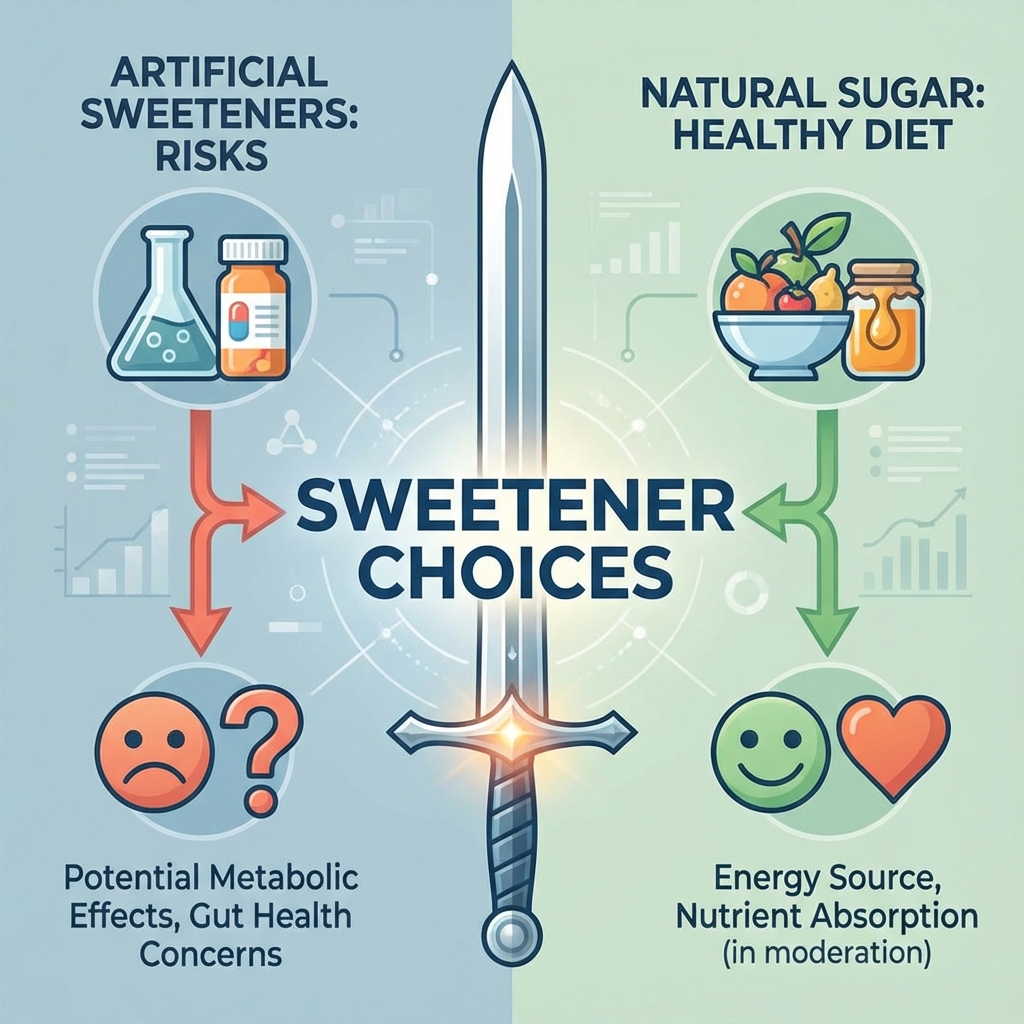
The Balance: Sweet Taste vs. Health Risks
The Paradox: Long-Term Side Effects
Metabolic & Gut Health Concerns
Research suggests that instead of helping reduce weight, non-nutritive sweeteners may have negative effects:
- Increased Appetite: They may make you eat more, potentially leading to long-term weight gain.
- Gut Biome: Gut bacteria may be negatively affected, influencing metabolism.
- Cardiovascular Risk: Regular consumption may link to higher risks of high blood pressure and heart disease.
Recent Studies
A recent study published in the Canadian Medical Association Journal (CMAJ) found no consistent effect of artificial sweeteners on weight loss. Rather, long-term observational studies have linked their consumption to a relatively higher risk of:
The authors concluded that clinical trials did not support the intended benefits for weight management.
A Word of Caution
We should be cautious before using artificial sweeteners in large amounts and for long periods. Do not be easily swayed by advertisements for sugar-free confectionery and diet sodas.